
Packages
JUNIORS
"The Edge" Package
Seniors
"A TO Z" Package
"It's Going To Be OK" Package
Single Application Review
transfers
Basic Consulting Package
Transfer Package
The Koppelman Group is dedicated to the success of its students.
“I couldn’t have imagined going through the college process without the assistance and guidance provided by the Koppelman Group. Caroline ensured that we understood every aspect of applications, and helped us to destress at a time when we could have been extremely overwhelmed. Throughout our time together, Caroline was always gracious with her advice, knowledgeable about the process itself, and willing and able to make sense of what seemed like utter chaos. I highly recommend the services of the Koppelman group.”
Ready to make an investment in your child's future success?
Latest Blog Articles
The University of Texas in Austin carries the unique reputation of being an outstanding school and an amazingly fun college experience. It’s not surprising, then, that students flock to the university. Demand is high, too, for transfer students.
Northeastern is an impressive university with campuses in Boston, London, and Oakland, CA. There are nearly 20,000 undergraduate students at Northeastern across the three campuses, with thousands participating in global experiences each year. The main campus, though, is Boston, and Northeastern is considered a top-50 research university.
The University of North Carolina-Chapel Hill is a top public research university and has a long tradition of welcoming transfers with strong academics and a clear sense of direction. They welcome about 900 transfers each year, joining a robust transfer community on campus.
The University of Virginia is a top public research university in Charlottesville, Virginia. The university holds a sense of a great purpose at its core. They seek out students who want to do something more than simply get a degree, whether they join the community as first-years or transfers.
Cornell University is a top research university and a member of the famed Ivy League. The program is unique among the Ivy League for many of their programs, especially those related to agriculture, management, and labor relations. This makes it highly sought after as a transfer option, offering both highly-respected degrees and uniquely focused career trajectories.
Georgetown is a highly-respected Jesuit university in Washington D.C that is particularly well-known for opportunities in politics, policy, foreign service, and the humanities more broadly. Part of the loosely defined and very unofficial “Ivy Plus” club, Georgetown is difficult to get into as a first-year. Unfortunately for prospective transfers, it isn’t any easier as a transfer applicant.
The University of Michigan is a top public state research university, and they have a long tradition of welcoming transfers. For the fall of 2024, Michigan received 6,832 applications for transfer and accepted 2,385. Transfers who are accepted by Michigan are rewarded with more flexibility than most other top schools: they can start in any season.
The University of Pennsylvania, or Penn, is an outstanding Ivy League university with equally impressive outcomes. It is mid-size, with 10,610 undergraduates across a range of colleges, and attracts students who think big. At Penn, students put their big ideas into practice. The Philadelphia setting empowers taking action rather than waiting for graduation.
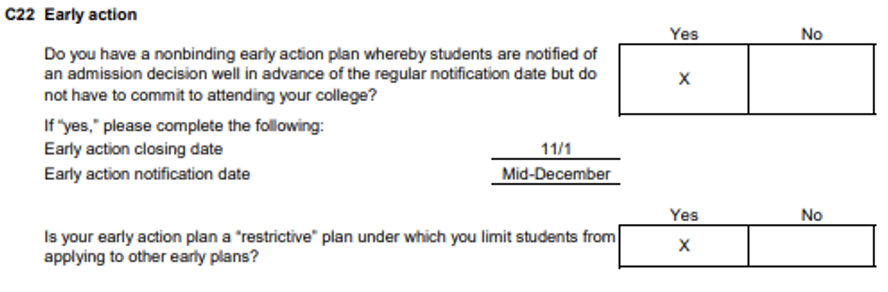
Princeton has a 4.62% acceptance rate during the 2024-2025 admissions cycle, which means it is hard to get into. But makes sense for a school that boasts famous alumni like Michelle Obama, Jeff Bezos, and the fictional Jack Donaghy. But that 4.62% number really doesn’t tell us that much other than the school is hard to get into – and we already knew that before we wrote this post, and you already knew it before you read this post. There are a lot of other data points that can give us interesting insight into how schools operate, and today we’re going to break down Princeton’s data and tell you how to apply it strategically.
During the 2024–2025 admissions cycle, USC reported an acceptance rate of 9.81%, making it the most selective in the school’s history. But that top-line percentage doesn’t actually explain very much on its own. USC does release some admissions data publicly, but to really understand what’s happening, you have to dig deeper. That’s exactly what we do every year to help students approach selective admissions with realistic expectations and an intentional game plan.